NeuroContour Art and Neuroaesthetic Biophilic Plants for Mental Wellness

A Vision for the Neuroaesthetic Federation of India
Have you ever entered a space and instantly felt your breath slow down? Or walked into another room and felt restless without knowing why?
Your brain is always responding to your environment. Light, colour, texture, scent, airflow, and natural elements continuously send signals to your nervous system. This is the foundation of neuroaesthetics. When we intentionally design these signals, we create spaces that support clarity, emotional balance, and mental resilience.
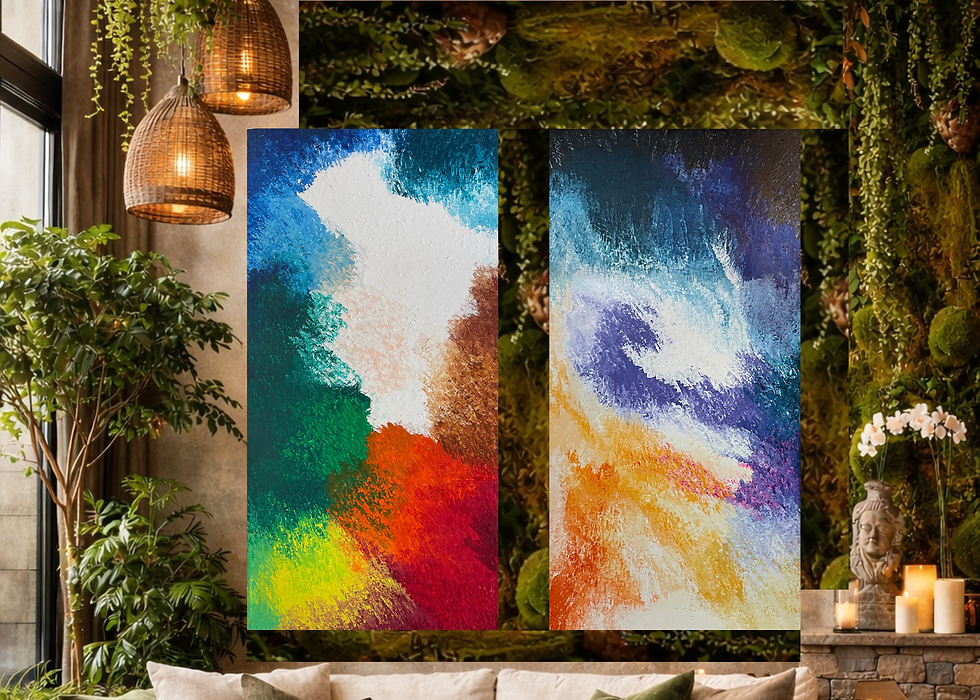
NeuroContour Art integrates neuroaesthetic science with biophilic plant design to create environments that actively support mental wellness.

Understanding Neuroaesthetics
Neuroaesthetics studies how the brain perceives beauty, form, colour, and sensory patterns. It examines how environmental stimuli influence mood, focus, stress hormones, and even physiological responses such as heart rate and blood pressure.
When interior design aligns with how the brain naturally processes sensory information, the result is not just beauty. It is regulation.
NeuroContour Art is built on this principle. Every contour, colour gradient, texture movement, and spatial rhythm is designed to provide visual coherence, reduce cognitive overload, and stimulate calm focus.
Why Biophilic Plants Matter to the Brain
Human beings are biologically wired to respond positively to nature. This innate connection is known as biophilia. Research consistently shows that exposure to natural elements:
• Reduces cortisol levels• Improves concentration• Enhances emotional stability• Regulates blood pressure• Supports restorative sleep
Biophilic design does not require a forest. Even small, intentional plant placement can create measurable mental shifts.
Recommended Neuroaesthetic Plant Pairings
• Snake Plant – Supports air purification and offers strong vertical visual lines that create psychological grounding.• Peace Lily – Soft curved forms promote visual calmness and emotional softness.• Areca Palm – Introduces gentle movement and natural light diffusion.• Ficus Lyrata (Fiddle Leaf Fig) – Large leaves create visual stability and structured presence.• Pothos – Flowing forms reduce harsh visual boundaries and soften architectural rigidity.
When these plants are integrated with NeuroContour Art, the environment becomes both neurologically and biologically responsive.
Light: The Brain’s Natural Regulator
Natural light stimulates serotonin production, enhancing mood and cognitive clarity. Warm lighting mimics sunrise and sunset frequencies, signaling safety and relaxation to the nervous system.
NeuroContour Art is designed to interact dynamically with light. Textured palette knife movements create subtle shadow play, activating gentle neural engagement without overstimulation.
Practical applications:• Keep windows unobstructed• Use sheer curtains instead of heavy drapes• Replace harsh white lighting with warm-toned LEDs• Position plants where filtered light enhances leaf translucency
Light becomes a co-creator of emotional atmosphere.

Colour as Neural Language
Colour is processed by the limbic system before conscious thought. It acts as emotional background music.
Soft greens communicate calm.Muted blues support focus.Warm yellows stimulate optimism.Earth tones create grounding stability.
NeuroContour Art uses carefully calibrated palettes inspired by natural ecosystems. These palettes are not decorative accidents. They are intentional neurological tools.
For those unable to repaint entire rooms, introduce colour through:• Accent cushions• Natural fibre rugs• Biophilic wall panels• A single NeuroContour Art focal piece
The brain receives the signal even through small interventions.
Decluttering for Cognitive Breathing Space
The brain has limited processing bandwidth. Visual clutter increases cortisol and mental fatigue. Every unattended object competes for attention.
Neuroaesthetic interiors prioritize visual hierarchy. Clear focal points reduce noise. Balanced spacing creates psychological breathing room.
One practical method:If you touch an object, return it to its designated place immediately.
Decluttering is not about perfection. It is about reducing neural overload.
Sensory Integration: Sound, Scent, Texture
Mental wellness is multisensory.
Sound: Soft instrumental music, water features, or acoustic dampening textiles regulate stress responses.Scent: Jasmine, sandalwood, and subtle essential oils activate memory and emotional comfort pathways.Texture: Natural wood, stone finishes, and woven fibres create tactile reassurance.
NeuroContour Art surfaces complement these elements by introducing controlled visual texture that stimulates without overwhelming.
Personal Identity and Emotional Safety
The brain thrives on familiarity. A space that reflects personal meaning promotes emotional security.
Include:• Photographs with positive memories• Art that resonates spiritually or emotionally• Objects gifted with significance
NeuroContour Art integrates symbolic contour movements inspired by spiritual and natural geometries, offering both aesthetic and contemplative depth.
Airflow: The Invisible Essential
No neuroaesthetic design can compensate for poor ventilation. Oxygen availability directly influences cognitive function and mood.
Ensure:• Cross ventilation where possible• Regular plant care to maintain air quality• Avoidance of synthetic heavy fragrances• Balanced humidity
Fresh air sustains the neurological benefits created by visual and biophilic elements.

NeuroContour Art as a Mental Wellness Instrument
NeuroContour Art is not merely decorative. It functions as:
• A visual regulation tool• A stress modulation medium• A focus enhancement anchor• A biophilic integration surface
When paired with living plants, natural light, airflow, and intentional spatial planning, it transforms interiors into neuro-supportive ecosystems.
This approach aligns strongly with the mission of the Neuroaesthetic Federation of India to integrate scientific understanding of aesthetics with practical design for human flourishing.
You Do Not Need to Renovate Everything
Mental wellness through design begins with small steps:
• Replace one harsh light bulb• Add one plant• Remove one cluttered shelf• Introduce one grounding artwork
Over time, these subtle interventions recalibrate your environment and, consequently, your nervous system.
Frequently Asked Questions
1. Do I need to redesign my entire home to apply neuroaesthetics?No. Start with lighting, plants, decluttering, and one meaningful art piece.
2. Can interiors truly affect mental health?Yes. Environmental cues continuously influence brain chemistry, emotional regulation, and cognitive clarity.
3. What are the fastest mood-boosting changes?Increase natural light, introduce a plant, and reduce visible clutter.
4. Does this work in small apartments?Absolutely. Mirrors, compact plant arrangements, and focused artwork can significantly shift spatial perception and mood.
5. Do colours genuinely influence emotions?Yes. Colour perception directly interacts with emotional processing centers in the brain.
6. Can modern furniture blend with biophilic elements?Yes. Combine sleek forms with natural textures like jute, wood, or plant life for balance.
7. What must never be ignored?Airflow. Without fresh air, neurological benefits diminish significantly.
A Call for Collaborative Leadership
As India advances in architecture, wellness, and urban design, integrating NeuroContour Art with neuroaesthetic biophilic principles offers a scientifically grounded path toward preventive mental health support.
For institutions, healthcare settings, corporate offices, educational campuses, and homes, the opportunity is clear. Interiors can either drain mental energy or restore it.
The choice is design.
And design, when guided by neuroscience and nature, becomes a silent healer.


Comments